The Architecture of the Soul

Beedo


Essential Points of Artistic Research
The Spark of Origin: The Captain Dog and Love as a Universal Driving Force

- Biographical origins: All of Pablo’s art stems from a very specific emotional core—his unconditional love for his dog, Capitano. The deep desire to create a statue in his honor served as the starting point for his entire body of work.
- Poetic evolution: What began as a personal tribute has, over time, taken shape, become more defined, and grown more refined—elevating itself into a universal inquiry. Love is the true "unmoved mover" of this art: a force that originates in a bond with a being within Creation and expands to become a philosophy of life, demonstrating that every great work of art is nothing more than the formal expression of a pure emotion.
The Structure of Life: Slabs and Time
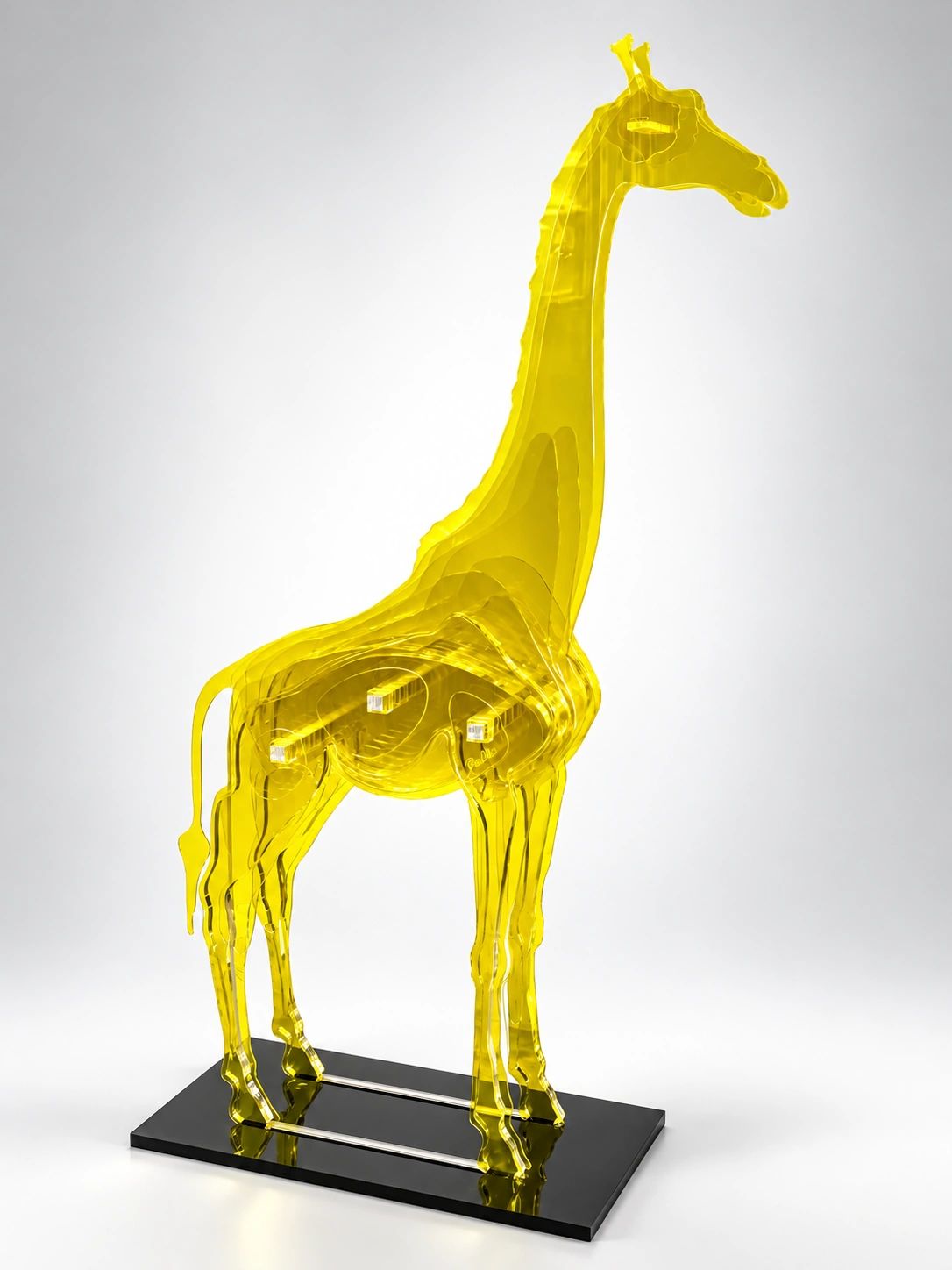
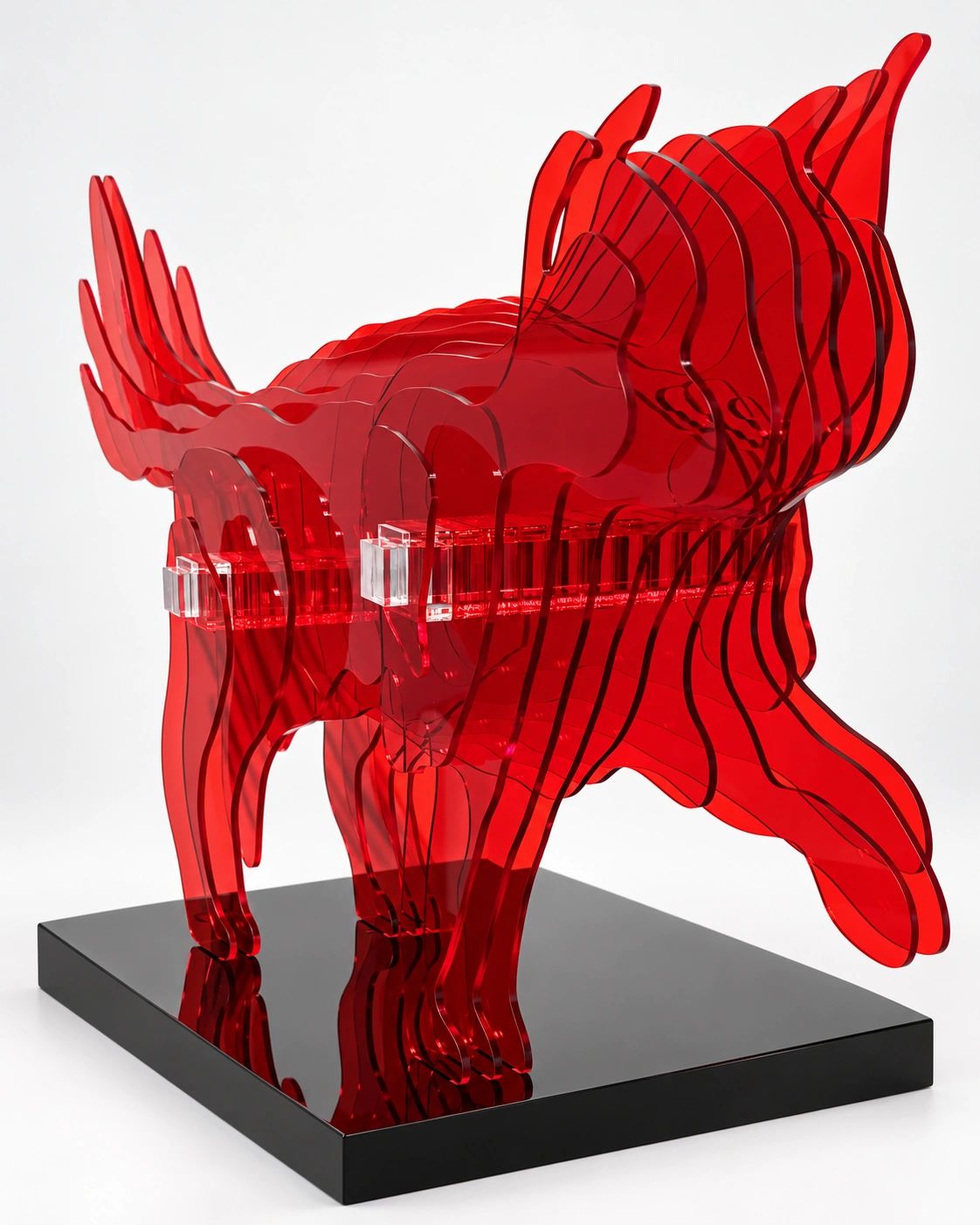
- The technique: The sculptures are composed of a combination of plates of various sizes and shapes, which, when assembled, create the form..
- The metaphor: Each individual slab represents a day of our existence. Some days are grand, intense, and full of meaning; others are smaller, seemingly devoid of major events. Yet, the work demonstrates that it is only the sum of all these fragments of time that gives shape to something monumental and sacred: Life.
Against Welding: The Balance of Freedom and Will
- The construction philosophy: The panels are not joined by welding—which would imply a form of coercion or constraint—but instead are held in place solely through precise, millimetric interlocking, a delicate balance, and what the artist calls "Pivots of Trust"—elements that are transparent, subtle, and essential.
- The human and social message: This technical choice serves as a powerful anthropological metaphor. Just as the slabs hold together through spontaneous balance rather than by imposition, human beings, too, should come together out of free will, empathy, and mutual trust. Only by rejecting social constraints and choosing mutual support can humanity build something infinitely greater than the sum of its individual members.
Fragility and Grace of Light
- The formal choice: The sculptures forgo the opaque monumentality of classical marble, allowing light to pass entirely through them by virtue of the transparency of modern colored acrylic.
- The spiritual concept: The "opaque walls" of selfishness are brought down by the transparency of matter. There is a subtle, profound Christian sentiment in this vision: fragility is not a weakness to be hidden, but rather the empty space in which grace is revealed. The work thus becomes a testament to how our vulnerability is, in reality, a signature left by the Author.
Animal Subject: The Purity of Creation
- The choice of subject: Contemporary research finds expression through the figure of an animal, which emerges from the joining of the plates.
- The spiritual concept: Animals are chosen as guardians of a pure and untainted perspective on Creation. Within them resides the capacity for an unconditional love that knows no barriers, judgments, or limits—a love that perceives the very essence of things. Through the animal form, Pablo not only celebrates the sacredness of life but also leads humanity back to the purity of its origins.
Awareness of Error: The Balance Between Precision and Reality
- The technical challenge: Since the sculptures are composed of stacked sheets, they must account for the material’s millimeter-level tolerances. For this reason, the finished piece will never be an exact, sterile replica of the theoretical design. To achieve true stability and find its center of gravity, each work must be assembled and recalibrated at least twice.
- Inner metamorphosis: This physical limitation becomes a key turning point—a fundamental therapeutic passage—for this architect of balance and precise interlocking. Born on the 9th of September, Pablo is, by nature, a "victim of precision"—a trait which, if taken to an extreme or obsessive level, risks blocking and immobilizing the genuine evolution of his artistic practice.
- The philosophical message: The act of creation becomes a school of acceptance—in practice, one must contend with life, with fortune (or the lack thereof), and with the unexpected. Art helps us understand and accept that it is wise to embark on a journey knowing from the outset that the result will not be perfect on the first attempt. Only through perseverance, attentiveness, patience, and diligence does every piece eventually fall into its proper place, dissolving rigidity and revealing the true work.
Kropp

Liliequist
“Because the evolution of art requires a long and personal journey”
Liliequist


Isidoro
““Romeo, an artistic figure steeped in the collective imagination””
Isidoro
